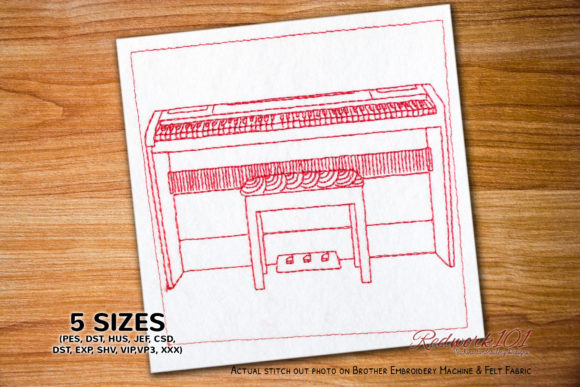
Studio-Piano Embroidery Design Review for Business Merchandise
As an embroidery designer working primarily with small businesses and product brands, my first step with any new file is a practical review for its real-world application. When evaluating the Studio-Piano embroidery file, I immediately consider its potential beyond decoration: how will this design function as a tangible asset for a business's identity and products?
First Impression and Brand Personality
The title Studio-Piano suggests a specific, crafted instrument, not a generic one. This gives the design a sense of authenticity and niche focus. For a business, this translates into a handmade and classic aesthetic. The optional Box Stitch detail mentioned in the description—and the note about a different outer box color—indicates a design with layers. This can create a professional and slightly rustic feel, depending on thread color choices. It feels less playful and more elegant, which would align beautifully with brands built on craftsmanship, such as a boutique bakery, a creative studio, a specialty café, or a local florist.
The Music category is inherent, but the true value for a business likely lies in the symbolism: precision, artistry, harmony. A pet brand or a handmade shop might use it not to sell music, but to evoke these qualities in their own products.
Real Business Applications for Studio-Piano
My design review centers on where this embroidery file could physically live and add value to a business.
Primary Merchandise and Uniform Uses
- Embroidered Patches: This is a top application. A Studio-Piano patch can be sewn or ironed onto tote bags, aprons, or backpacks as a product label or brand mark. For a small café, a patch on an apron creates a unified, durable staff look.
- Chest Logo Accents: On work shirts or polo uniforms, a modest-sized Studio-Piano near the chest or sleeve adds a subtle, classy branding touch without overwhelming the garment.
- Cap Embroidery: The design's likely vertical orientation (given the piano's height description) suits a cap front well. This is excellent for event merch or staff caps at a local business.
- Tote Bag Design: A single, centered embroidery on a canvas tote bag creates premium customer gifts or sellable merchandise for an Etsy seller or boutique.
- Apron Embroidery: For bakeries, florists, or craft workshops, an apron with this design elevates the handmade product presentation and builds customer trust in the brand's attention to detail.
Secondary Branding and Product Add-Ons
- Product Packaging Accents: Small embroidered labels on wrapping, pouches, or boxes can make a product feel exceptionally crafted.
- Printable Mockups: Using the design in digital mockups helps a business visualize its custom apparel line before committing to production.
- Event Merchandise: For markets or pop-ups, this design on limited merchandise builds visual consistency and recognition.
Critical Considerations for Professional Use
Success in commercial embroidery depends on anticipating pitfalls. Here are key points for businesses to discuss with their embroidery shop.
Where to Use Studio-Piano Carefully
- Small Patch Sizes: If the design has intricate details or the optional box outline, test it at a very small size (under 2 inches) to ensure clarity. Not all designs shrink well.
- Cap Fronts and Curved Surfaces: The 44-47 inch tall piano shape may require specific orientation. Proper hoop size and stabilizer are non-negotiable here to prevent distortion.
- Dark Uniforms: The description mentions color variation. If using on dark fabrics, ensure thread color contrast is planned (e.g., lighter threads) so the design remains visible.
- Items for Frequent Washing: High stitch density in detailed areas can make designs stiff and less durable on repeatedly washed items like staff shirts. A simpler version of the file might be preferable.
- Textured Fabric: On materials like canvas for tote bags, the design must have sufficient stitch coverage to stand out against the texture.
Embroidery Designer's Practical Notes
- Test in Black and White First: Run a sample in monochrome to assess the fundamental structure and contrast before choosing final thread colors.
- Review Thread Color Contrast: The optional box stitch in a different color is a branding opportunity, but check that the colors work harmoniously and maintain readability.
- Test on Real Fabric: Never rely solely on the digital file. Embroider a sample on the actual fabric you'll use for your small business merch, whether it's denim, canvas, or polyester.
- Create a Mockup for Client Approval: If you're an embroidery shop, provide a visual mockup to the business owner to confirm size, placement, and color before production.
- Compare Beside Other Design Assets: Place the embroidered sample next to your business's logo, fonts, and other visuals to ensure it strengthens your brand identity, not clashes with it.
- Confirm Commercial Licensing: Before using the digital embroidery file for any sellable product, verify the license terms allow for commercial use. This is a fundamental step.
The Impact on Brand Identity and Value
Ultimately, an embroidery design like Studio-Piano is a physical manifestation of your brand's story. On a staff uniform, it fosters professionalism and team cohesion. On a tote bag sold in your Etsy shop, it increases the perceived product value and serves as a walking advertisement. On an apron in your bakery, it enhances the handmade presentation and directly engages buyers, making them feel connected to the craft.
The design's classic and specific nature can build customer trust and recognition. A customer seeing the same elegant piano embroidery on your café's cap, your market stall apron, and your product packaging creates a powerful, consistent visual memory. It signals that you care about the details, from your product to your presentation.
My final advice is to treat this embroidery file as a key design asset. Its success depends not just on the digital file, but on your thoughtful application—testing it, placing it strategically, and ensuring it aligns with every other touchpoint of your business. The finished product, the actual embroidered item, is where your brand's impression is truly formed.