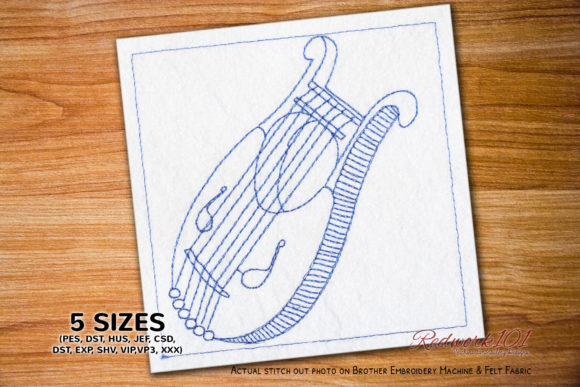
A Professional Review of the Music Clef Embroidery Design
As an embroidery designer preparing products for a weekend craft fair, every design file in my library gets a practical, sales-focused evaluation. Today, I’m looking at the Music Clef embroidery design. This review is from the perspective of a maker standing at a booth, surrounded by tote bags, aprons, tea towels, and patches, trying to decide where this design will shine and what will make it sell.
First Impression: Elegant, Decorative, and Universally Recognizable
The first thing that strikes me about the Music Clef is its inherent elegance. The design isn’t cute or funny; it’s decorative and sophisticated. This isn’ a rustic farmhouse motif. It feels more premium and artistic. The clef symbol is a classic, instantly recognizable icon, which gives it a huge advantage on the sales floor. Customers understand it at a glance. For a handmade product, that immediate recognition translates to faster purchasing decisions. It speaks to music lovers, musicians, teachers, and anyone with an appreciation for the arts without needing any explanatory text.
Where the Music Clef Design Will Stand Out on Your Booth Table
Not every design works on every product. Placement is key for visual appeal and perceived value. Here’s my judgment on where to deploy the Music Clef embroidery file for maximum impact.
Top Tier Products for Sales & Display
Pillow Covers and Tea Towels: These are my top recommendations. The clef’s elegant lines make it a perfect focal point for home decor items. On a linen pillow cover, it looks soft and decorative, elevating a simple item into a giftable handmade product. On a high-quality tea towel, especially a neutral or dark fabric, it becomes a striking kitchen accessory that feels more like art than a utilitarian item. The design’s clarity is paramount here.
Tote Bags and Market Bags: As a larger focal design on the front of a canvas tote bag, the Music Clef commands attention. It makes the bag look thoughtfully designed, not just stamped with a pattern. This increases the perceived value and justifies a higher price point at your craft fair booth.
Embroidered Patches: This is a fantastic application. A Music Clef patch can be sold as a standalone item for customers to apply to their own garments or gear. It also serves as a lower-cost entry point for buyers, which is always smart for booth sales. As a patch, it needs to retain detail at a smaller size.
Strong Supporting Products
Aprons and Fabric Pouches: On an apron, positioned centrally, it adds a professional, decorative touch, perfect for a boutique maker focusing on kitchen or crafting accessories. On a small fabric pouch, it becomes a delightful accent, suggesting a gift for a music student or enthusiast.
Caps: Embroidering on curved cap surfaces requires careful testing. The Music Clef, if sized appropriately, could be a subtle, stylish accent on the front or side of a cap. Its success here depends heavily on stitch density and stabilizer choice to prevent distortion.
Practical Production & Selling Considerations
Turning a digital embroidery file into a profitable, batch-produced craft fair product requires a cold, hard look at the practicalities.
Batch Production and Design Repeatability
The Music Clef design appears, from its description, to be a straightforward, single-icon design. This is excellent for batch production. You can efficiently run multiple tea towels or tote bags without complex color changes or excessive thread breaks, assuming the stitch density is manageable. This repeatability is crucial for stocking a booth with consistent, high-quality items.
Photography and Online Sales Potential
For Etsy sellers and small shop owners, how a design photographs is critical. The Music Clef, being a clear, bold symbol, should photograph very well. It will stand out in listing images, especially on contrasting fabrics. Creating a printable mockup or, more importantly, a real physical sample for photos is essential. Shoot it on a dark fabric to show the thread pop and on a light fabric to showcase its delicate lines.
Careful-Use Notes and Designer Checks
Before committing to a full production run, here are the hands-on tests I would perform:
- Test on Scrap Fabric First: Always embroider the design on a scrap of the actual fabric you plan to use—textured towels, thick canvas, or sleek cotton—to check for puckering or thread coverage.
- Check Thread Contrast: This design relies on its form. Use high-contrast thread colors. White or gold on navy, black on cream. Poor contrast will kill its elegance.
- Review Scale and Clarity: Embroider it at the intended smaller sizes (for patches or caps) to ensure the lines don’t blur or lose definition. Tiny details can get lost.
- Inspect Stitch Density: Dense stitch areas can be problematic on towels or lightweight bags, requiring the correct stabilizer to prevent fabric distortion.
- Confirm Hoop Size & Stabilizer: The description doesn’t specify a hoop size. You must confirm the design fits your intended hoop for each product type and pair it with the right stabilizer—cutaway for bags, tear-away for towels.
- Create a Real Booth Mockup: Don’t just rely on digital mockups. Make at least one finished product—a pillow or tote—to see how it feels in hand and how it draws eyes on your display table.
- Commercial Licensing: The product description mentions it’s a machine embroidery design. Before selling any finished products, you must confirm the commercial licensing terms of the digital embroidery file. This is a non-negotiable step for any serious small shop product.
Final Booth Strategy: Leveraging the Music Clef for Customer Engagement
On the craft fair floor, the Music Clef design can strengthen your booth’s narrative. It adds a layer of thematic cohesion if paired with other artistic or decorative designs. Its universal appeal invites conversation—“Oh, my daughter plays piano!”—which boosts buyer engagement. It elevates your brand consistency by offering a design that feels intentional and premium, not generic.
To maximize its selling power, display it on products where its elegance is unmistakable: a beautifully made pillow cover at the front of your table, or a high-contrast tote bag hanging prominently. These act as silent salespeople. The Music Clef isn’t a flashy, trendy design; it’s a timeless one. That gives it longevity in your product lineup and makes it a reliable, repeatable choice for your embroidery business, turning a lovely embroidery design into a solid handmade product that sells.